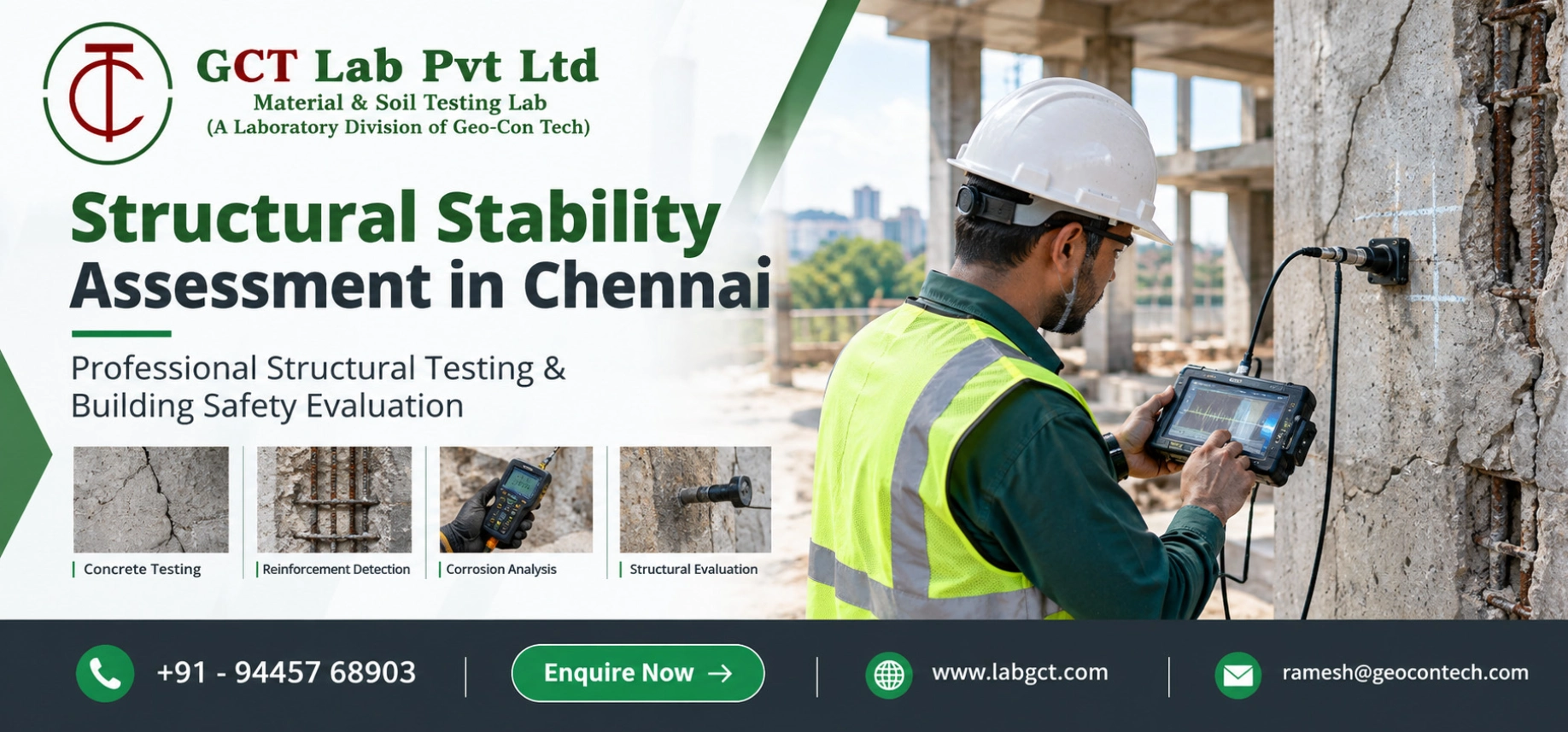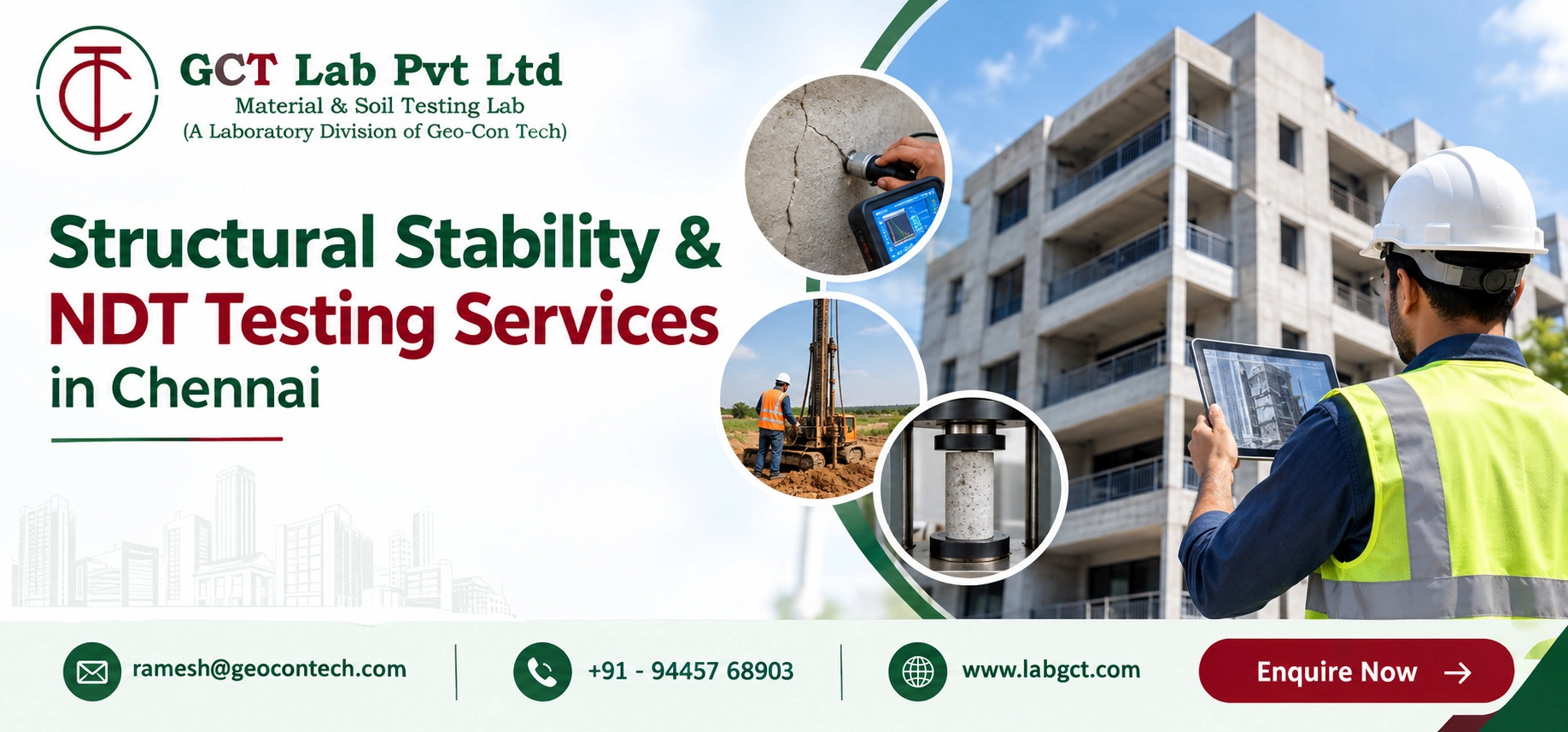

Advanced Testing for Structural Stability: How Modern Methods Help Protect Buildings
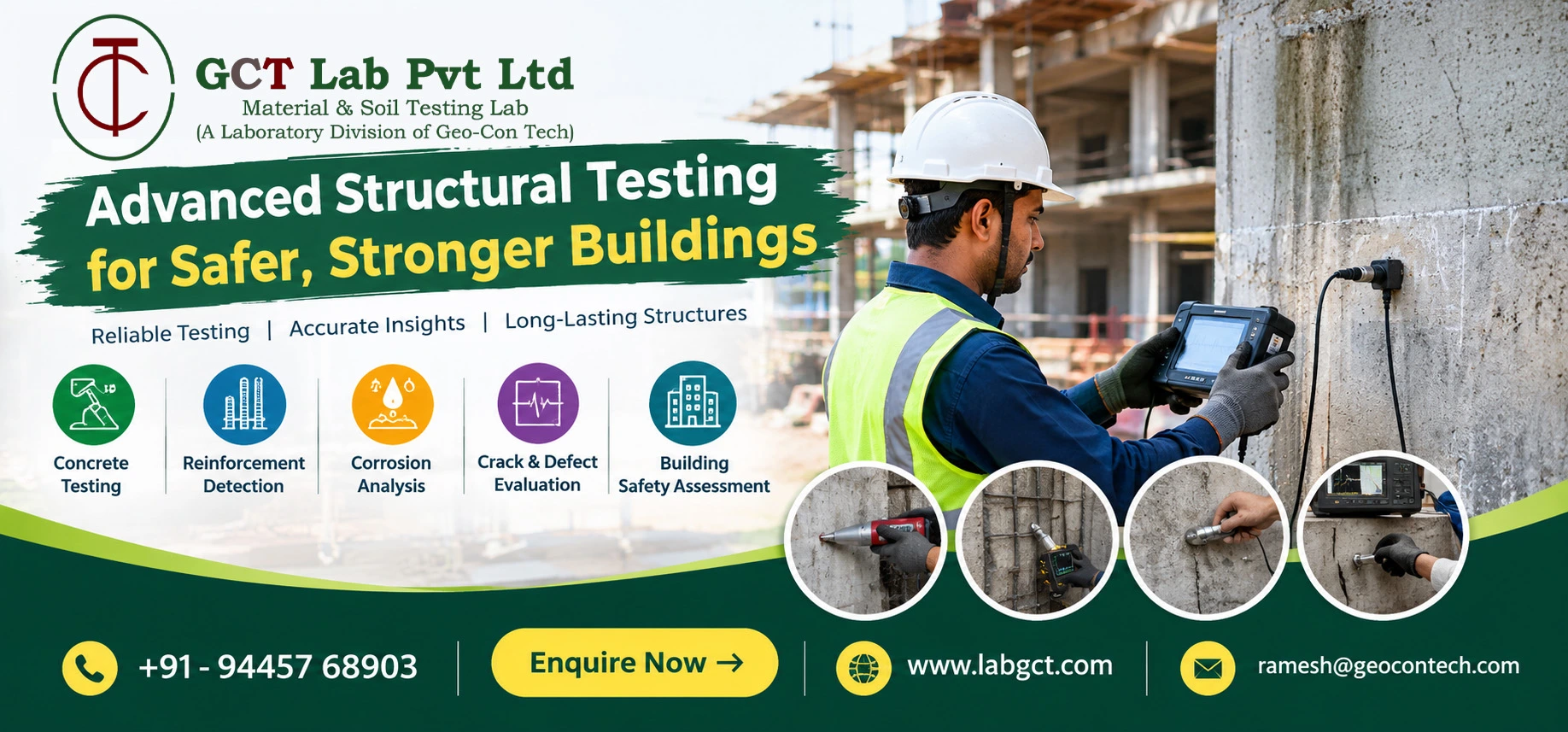
A building may appear strong from the outside while developing hidden defects within its concrete, reinforcement, masonry, or structural components. Cracks, corrosion, reduced material strength, water ingress, and long-term environmental exposure can gradually affect structural performance.
This is where advanced structural testing becomes important. Instead of relying only on visual observations, engineers can use specialized testing techniques to investigate the actual condition of a structure and identify potential problems before they become major safety concerns.
What Is Advanced Structural Testing?
Advanced structural testing involves the use of specialized inspection and testing methods to assess the condition, strength, durability, and performance of structural elements.
Depending on the building and the suspected issue, testing may include concrete assessment, reinforcement detection, ultrasonic examination, corrosion evaluation, load-related investigations, and other diagnostic techniques.
The information obtained through these tests helps structural professionals determine whether a structure requires routine maintenance, localized repairs, strengthening, or more detailed investigation.
Why Visual Inspection Alone May Not Be Enough
A visual inspection is an important first step in evaluating a building. It can reveal visible cracks, spalling concrete, dampness, deformation, exposed reinforcement, settlement symptoms, and other warning signs.
However, some structural defects may exist beneath the visible surface.
For example:
- Concrete may have lost strength without showing obvious external damage.
- Reinforcement may be corroding inside the concrete.
- Voids or internal discontinuities may not be visible externally.
- Excessive moisture may be contributing to deterioration.
- Reinforcement may not be positioned as originally designed.
- Certain cracks may require investigation to determine their cause and significance.
Advanced testing provides additional technical evidence that can support a more informed structural assessment.
Common Advanced Testing Techniques
1. Rebound Hammer Testing
Rebound hammer testing is a non-destructive method commonly used to assess the surface hardness of concrete.
It can help engineers evaluate variations in concrete quality across different locations of a structure. Since surface hardness can be influenced by several factors, the results are generally interpreted along with other investigation findings rather than being considered in isolation.
2. Ultrasonic Pulse Velocity Testing
Ultrasonic Pulse Velocity (UPV) testing uses sound waves passing through concrete to assess its internal condition.
The technique can assist in identifying variations, discontinuities, cracks, voids, and areas that may require further examination. When combined with other concrete tests, UPV results can contribute to a broader understanding of concrete quality.
3. Reinforcement Detection
Determining the location and arrangement of reinforcement is often necessary when investigating existing reinforced-concrete structures.
Specialized instruments can help identify reinforcement position and provide information about concrete cover. This can be particularly useful before repair work, strengthening, drilling, or other interventions are undertaken.
4. Half-Cell Potential Testing
Corrosion of reinforcement can significantly affect the durability of reinforced-concrete structures.
Half-cell potential testing is an electrochemical technique used to assess the likelihood of reinforcement corrosion. It can help identify areas that warrant closer examination and assist engineers in developing an appropriate repair strategy.
5. Carbonation Assessment
Carbonation is a natural chemical process that can reduce the alkalinity of concrete. As carbonation progresses toward embedded reinforcement, the protective environment around steel can be affected.
Carbonation-depth testing can therefore be useful when assessing older reinforced-concrete structures, particularly where corrosion-related deterioration is suspected.
6. Core Testing
In situations where more direct information about concrete properties is required, concrete cores may be extracted from selected structural elements and tested in a laboratory.
Core testing can provide valuable information about the in-situ condition and compressive strength of concrete. Because it involves localized removal of material, the locations and number of cores should be determined by qualified professionals based on the investigation requirements.
How Advanced Testing Supports Structural Stability Assessment
Testing is most useful when it forms part of a systematic structural investigation.
A typical assessment may involve:
Initial Inspection → Condition Mapping → Selection of Tests → Field Investigation → Laboratory Analysis → Engineering Evaluation → Recommendations
The objective is not simply to collect test results. The results need to be interpreted in relation to the building's age, construction details, observed defects, environmental exposure, previous repairs, usage, and available structural drawings or records.
This integrated approach can help engineers distinguish between superficial deterioration and conditions that may have a more significant effect on structural performance.
When Should a Building Undergo Advanced Testing?
Advanced testing may be considered in several situations, including:
- Older buildings undergoing condition assessment.
- Structures showing recurring or significant cracks.
- Buildings with concrete spalling or exposed reinforcement.
- Structures affected by water leakage or prolonged dampness.
- Buildings exposed to aggressive environmental conditions.
- Properties being considered for renovation or change of use.
- Structures requiring repair or strengthening.
- Buildings where the original construction information is incomplete.
- Structures requiring technical documentation for safety or compliance purposes.
The appropriate testing program should always be determined according to the individual structure and the suspected defects.
From Test Results to Repair Decisions
Testing provides evidence, but the next step is engineering interpretation.
Depending on the findings, recommendations may include:
- Localized concrete repairs.
- Reinforcement corrosion treatment.
- Crack repair and monitoring.
- Waterproofing or moisture-control measures.
- Strengthening of structural members.
- Retrofitting of selected components.
- Continued periodic monitoring.
- Additional detailed investigation where required.
The objective is to select corrective measures based on the actual condition of the structure rather than relying solely on assumptions or visible symptoms.
The Role of Professional Structural Investigation
Structural testing should be performed using suitable equipment, documented procedures, and appropriately qualified personnel. Test locations, environmental conditions, calibration, sampling, and interpretation can all influence the reliability of the final assessment.
For this reason, advanced testing works best as part of a professionally managed structural audit rather than as an isolated testing exercise.
Building Confidence Through Scientific Assessment
The purpose of advanced structural testing is ultimately to obtain better information about an existing structure.
By combining field observations with appropriate non-destructive and laboratory-based investigations, engineers can develop a clearer picture of material condition, deterioration mechanisms, and areas requiring attention.
For property owners, facility managers, housing societies, commercial establishments, and authorities, this information can support better maintenance planning and more informed decisions about repairs, rehabilitation, and structural safety.
Advanced Structural Testing by Geo Con Tech GCT Lab Pvt Ltd
Geo Con Tech GCT Lab Pvt Ltd, the Laboratory Division of Geo ConTech, provides structural investigation and testing services designed to support the assessment of existing buildings and structures.
Our approach combines field inspection, appropriate testing techniques, technical evaluation, and clear reporting to help identify structural concerns and determine suitable next steps.
A properly planned investigation can help uncover issues that may not be apparent during a routine visual inspection and provide useful technical information for repair, maintenance, and strengthening decisions.
Conclusion
Structural deterioration is often a gradual process, and visible damage may not always reveal the complete condition of a building. Advanced testing offers engineers additional evidence to understand what is happening beneath the surface.
When supported by professional engineering evaluation, these testing methods can play an important role in structural condition assessment, maintenance planning, repair, and rehabilitation.
If you are concerned about the condition of an existing building, an appropriately planned structural investigation can provide the technical information needed to determine the next course of action.