Structural Stability Test: Ensuring Safety and Longevity of Buildings
A building may appear strong from the outside, but its actual safety depends on the condition and performance of its structural components. Over time, buildings can develop cracks, corrosion, material deterioration, settlement, or other structural issues that may affect their safety and service life.
A Structural Stability Test is a systematic assessment carried out by qualified engineers and testing professionals to evaluate the condition, strength, and stability of a building or structure. It helps identify potential structural concerns and provides technical information required for repair, rehabilitation, maintenance, or further structural evaluation.
GCT Lab Private Limited provides structural inspection and testing services in Chennai , across Tamil Nadu, and throughout India, supporting building owners, industries, institutions, developers, and other organizations with professional testing and assessment services.
Why Structural Stability Testing is Essential?
Structural stability testing helps determine whether a building or structure continues to perform safely under its intended loading and service conditions.
Regular or condition-based structural assessment can help:
- Identify visible and hidden structural defects
- Evaluate cracks, deterioration, and material degradation
- Assess concrete and other structural materials
- Detect reinforcement corrosion and related issues
- Understand the condition of structural members
- Support repair and rehabilitation decisions
- Evaluate the effects of ageing and environmental exposure
- Provide technical information for maintenance planning
- Improve confidence in the continued use of a structure
- Support documentation required for structural safety and compliance
Structural stability assessment can be particularly important for older buildings, industrial structures, commercial properties, residential buildings, institutional buildings, warehouses, and structures exposed to harsh environmental conditions.
Phases of Structural Stability Test
The scope of structural stability testing can vary depending on the building's age, type, condition, size, usage, and observed defects. A typical assessment can be organized into three broad phases.
Phase I: Preliminary Assessment – Engineer Alone
The first phase generally involves a visual and preliminary assessment by a qualified structural engineer.
During this stage, the engineer may review:
- Building age and available structural drawings
- Structural system and construction details
- Visible cracks and deformation
- Signs of settlement
- Concrete deterioration
- Corrosion-related damage
- Water leakage and dampness
- Condition of beams, columns, slabs, walls, and other structural elements
- Previous repair or modification work
- General service and loading conditions
The engineer documents the observed conditions and determines whether additional investigation or testing is required.
This preliminary assessment helps establish the scope and priorities for detailed structural investigation.
Phase II: Detailed Structural Inspection – Engineer + Laboratory Involvement
When visual inspection indicates that further investigation is required, the assessment can move to detailed testing.
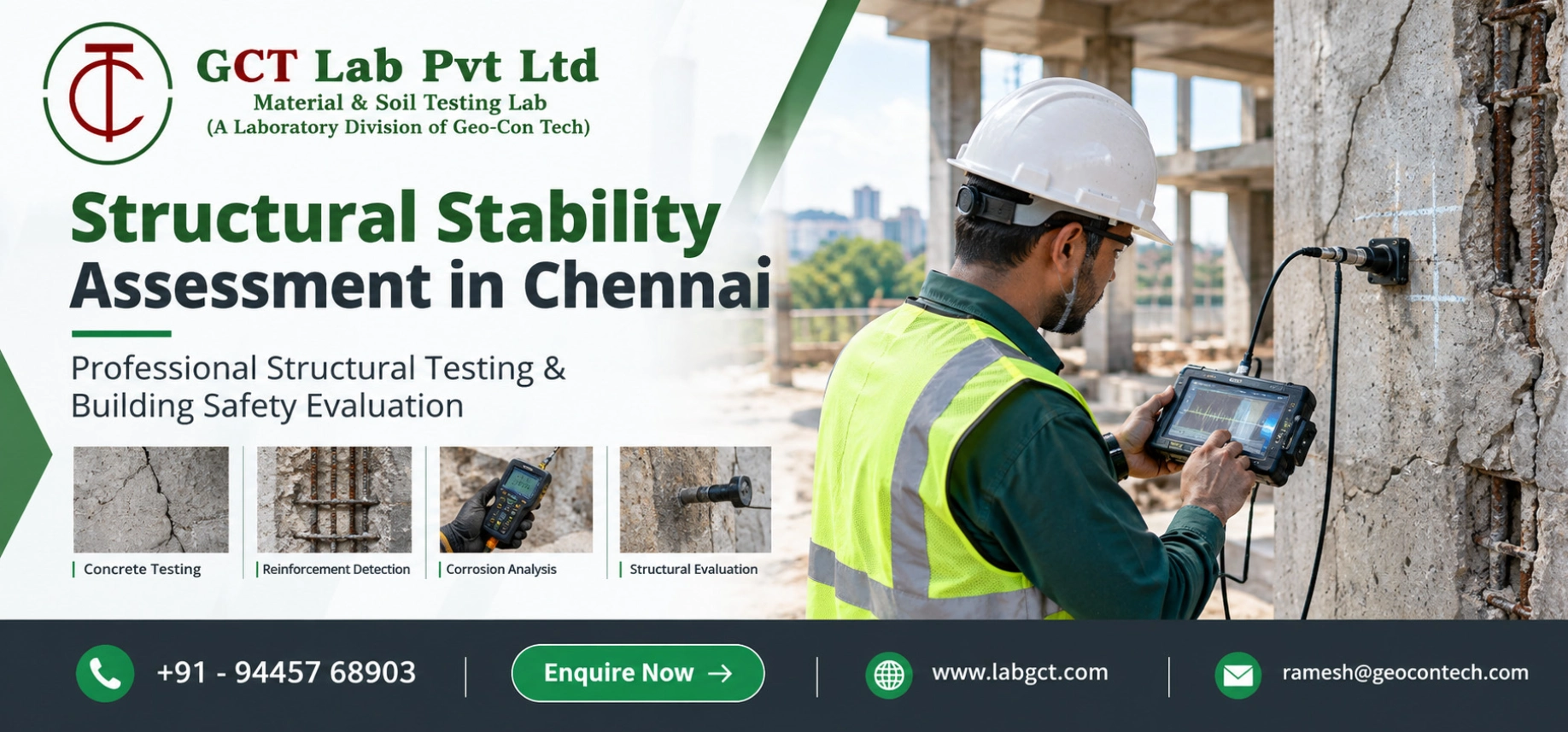
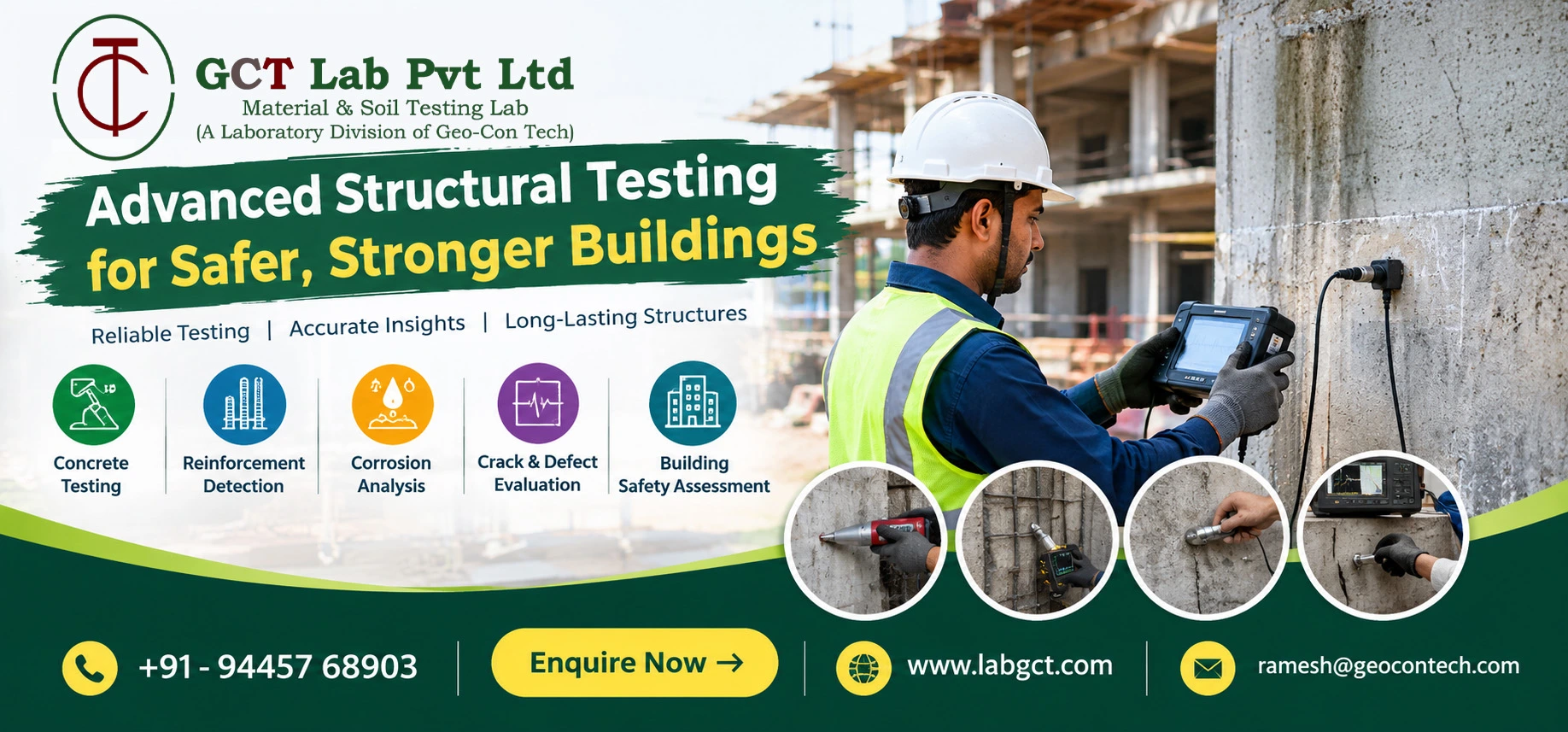
Depending on the structure and the issues identified, suitable non-destructive testing (NDT) , semi-destructive testing, material testing , or laboratory investigations may be considered.
Potential investigations may include:
- Concrete quality assessment
- Rebound hammer testing
- Ultrasonic Pulse Velocity (UPV) testing
- Reinforcement detection
- Cover thickness assessment
- Corrosion-related investigations
- Concrete core testing where required
- Chemical analysis of construction materials
- Assessment of cracks and deterioration
- Other specialized tests based on site requirements
The results obtained from field and laboratory investigations can help engineers develop a better understanding of the structural condition.
Phase III: Comprehensive Structural Review – Team of Experts + Specialized Labs
For complex, large, ageing, or severely deteriorated structures, a comprehensive assessment may require multiple technical specialists and specialized laboratory investigations.
This phase may involve:
- Detailed structural condition assessment
- Advanced material testing
- Specialized laboratory analysis
- Review of structural drawings and modifications
- Evaluation of structural distress
- Assessment of load-related concerns
- Structural analysis where required
- Correlation of field observations and test results
- Recommendations for repair, strengthening, rehabilitation, or further monitoring
The final assessment should be based on the available structural information, site observations, relevant test results, and engineering evaluation.
What Does a Structural Stability Assessment Cover?
The exact scope depends on the project requirements. A structural stability assessment may examine:
Concrete Structures
Assessment of concrete condition, deterioration, cracking, and other defects.
Structural Members
Inspection of columns, beams, slabs, foundations, walls, and other relevant structural components.
Reinforcement Condition
Investigation of reinforcement location, cover, and possible corrosion-related deterioration where applicable.
Material Performance
Testing and evaluation of construction materials using appropriate field and laboratory methods.
Structural Defects
Identification and documentation of cracks, spalling, deformation, settlement, corrosion, leakage, and other visible signs of distress.
Existing Buildings
Assessment of ageing buildings and structures to support maintenance, repair, renovation, or rehabilitation decisions.
Who Needs Structural Stability Testing?
Structural stability testing may be relevant for:
- Residential buildings
- Commercial buildings
- Industrial facilities
- Factories
- Warehouses
- Schools and colleges
- Hospitals and healthcare facilities
- Apartment buildings
- Office buildings
- Institutional structures
- Infrastructure and specialized structures
- Older buildings undergoing renovation
- Buildings undergoing major modifications or change of use
It can also be useful when a property owner observes significant cracks, concrete deterioration, settlement, corrosion, unusual deformation, or other structural concerns.
Why Choose GCT Lab Private Limited?
GCT Lab Private Limited provides professional testing and technical assessment services for clients in Chennai, Tamil Nadu, and across India.
Experienced Technical Approach
Structural assessment requires systematic inspection, appropriate testing methods, and engineering interpretation. GCT Lab combines field investigation and laboratory testing capabilities based on project requirements.
Comprehensive Testing Support
From preliminary investigation to detailed material and structural testing, the scope can be developed according to the condition and requirements of the structure.
Chennai to Pan-India Service
GCT Lab supports projects in Chennai and locations across Tamil Nadu and India, making its testing services accessible for different types of buildings and structures.
Reliable Testing & Documentation
Proper documentation of observations, test results, and technical findings helps clients understand the condition of their structures and plan appropriate next steps.
Project-Specific Testing
Not every building requires the same tests. The investigation can be planned according to the structure's age, construction type, observed defects, usage, and assessment requirements.
Protect Your Building with Professional Structural Assessment
Structural safety should not be based only on visual appearance. A professional structural stability assessment can provide valuable technical information about the current condition of a building and help identify areas that require attention.
Whether you require structural stability testing in Chennai , Tamil Nadu, or anywhere in India, GCT Lab Private Limited can support your project with appropriate inspection, testing, and laboratory services.
Contact GCT Lab Private Limited to discuss your structural testing and assessment requirements.
Frequently Asked Questions
1. What is a Structural Stability Test?
A Structural Stability Test is an engineering assessment used to evaluate the condition, integrity, and performance of a building or structure. It may include visual inspection, field testing, laboratory testing, and structural evaluation depending on the project requirements.
2. When should a building undergo structural stability testing?
Testing may be considered for ageing buildings, buildings showing cracks or deterioration, structures undergoing renovation or modification, or properties where there are concerns about structural condition. The appropriate scope should be determined based on the building and its observed condition.
3. What tests are commonly used for structural assessment?
Depending on the structure, engineers may consider tests such as Rebound Hammer, Ultrasonic Pulse Velocity (UPV), reinforcement detection, cover measurement, concrete core testing, corrosion-related investigations, and other specialized material tests.
4. Does GCT Lab provide structural testing services in Chennai?
Yes. GCT Lab Private Limited provides testing and technical assessment support in Chennai and can
5. Why is laboratory testing important for structural assessment?
Laboratory testing can provide additional technical information about construction materials and structural components when visual inspection alone is not sufficient. Test results can be considered along with site observations and engineering assessment to understand the condition of the structure.