How to Conduct a Structural Stability Check for High-Rise Buildings
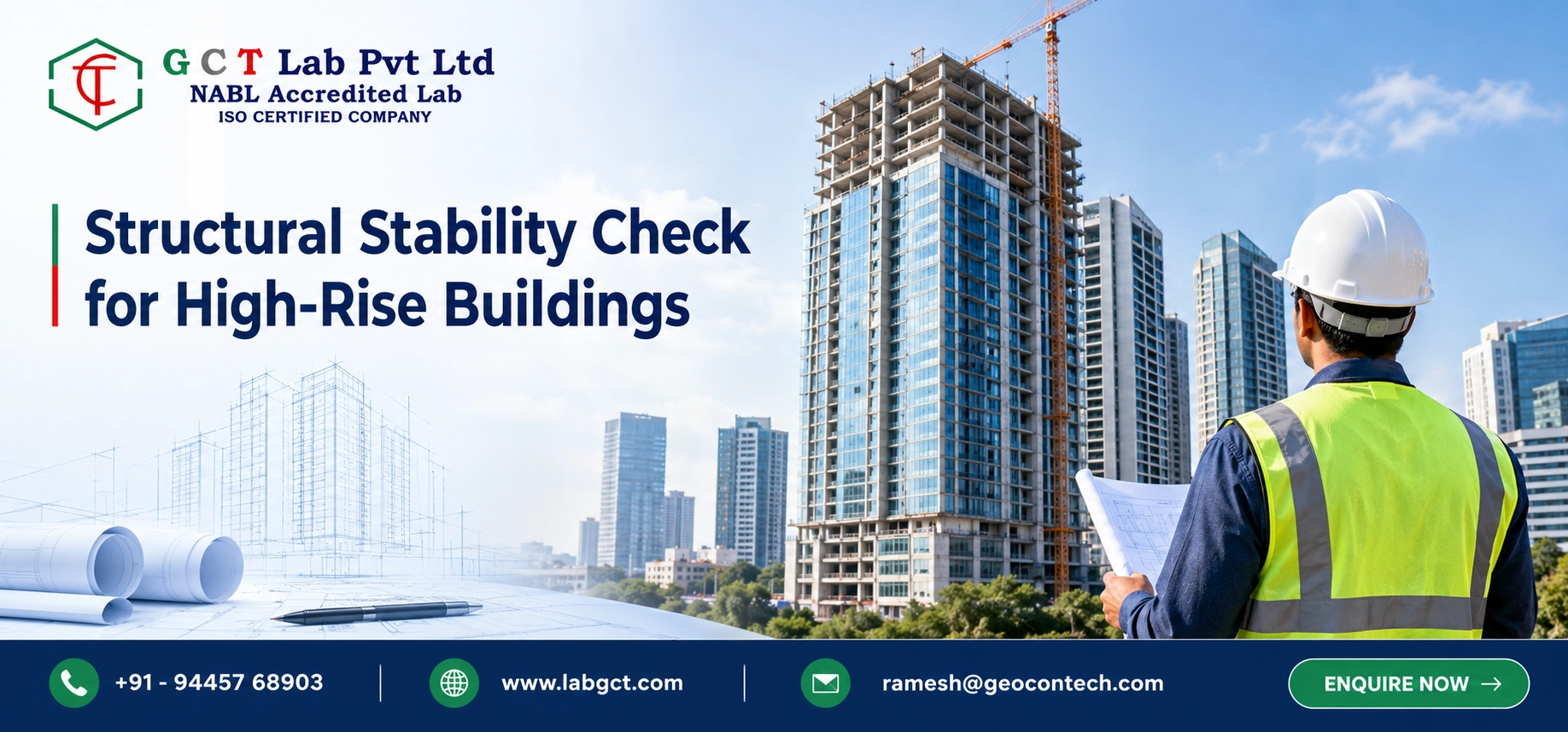
High-rise buildings are exposed to continuous structural loads, environmental conditions, vibration, wind forces, and long-term material deterioration. A structural stability check is therefore an important engineering assessment used to understand the condition, strength, and performance of a building.
A proper assessment may include visual inspection, structural analysis, Non-Destructive Testing (NDT) , material testing , load assessment, and engineering evaluation. The findings can help building owners, developers, facility managers, and authorities identify potential concerns and determine whether repair, strengthening, or further investigation is required.
For professional structural stability assessment and certification in Chennai , Tamil Nadu, and across India, GCT Lab Private Limited provides structural inspection, NDT, structural verification, stability certification, repair and rehabilitation consultancy, and related testing services.
Purpose of a Structural Stability Check in High-Rise Structures
A structural stability check helps engineers evaluate whether the existing structural system continues to perform as intended under applicable loads and conditions.
The assessment can help identify:
- Cracks, spalling, corrosion, or other visible defects
- Deterioration of concrete and reinforcement
- Changes in structural loading or building usage
- Potential weaknesses in structural members
- Effects of environmental exposure
- Signs that require further investigation or strengthening
- The need for repair, rehabilitation, or structural monitoring
For existing structures, a stability assessment should be based on available drawings and records, site observations, appropriate testing, and engineering judgment rather than relying on a single test or software output.
Step 1: Data Collection and Engineering Review
The first stage is to collect available information about the building and understand its original design and current usage.
Engineers may review
- Structural and architectural drawings
- Building age and construction history
- Previous inspection and test reports
- Material specifications
- Previous repair or alteration records
- Current occupancy and usage
- Changes made after original construction
- Available information about foundations and structural systems
The actual condition of the building should then be compared with the available design and construction information.
Step 2: Load Identification and Validation
High-rise structures are designed to withstand different types of loads. A structural stability assessment therefore requires identification and evaluation of relevant loading conditions.
Typical considerations include:
- Dead loads
- Live or imposed loads
- Wind loads
- Seismic effects
- Equipment and machinery loads
- Water tank and service loads
- Changes in occupancy or usage
- Additional loads introduced through modifications
Any significant change in building use or additional loading should be reviewed by qualified structural professionals to determine its effect on the existing structure.
Step 3: Structural Modeling and System Behavior
Where required, engineers may develop or review a structural model to understand how the building behaves under relevant loading conditions.
Depending on the project, the evaluation can consider:
- Structural geometry
- Column and beam configuration
- Slab systems
- Shear walls and lateral-load-resisting systems
- Foundation conditions
- Material properties
- Load combinations
- Structural member behavior
- Overall stability and serviceability
Structural software can support engineering calculations and analysis, but the results need to be checked against actual site conditions and available evidence.
Step 4: Lateral Load Resistance Evaluation
Lateral loads are particularly important in high-rise buildings because wind and seismic actions can produce significant horizontal forces.
Engineers may evaluate the building's:
- Lateral load-resisting system
- Shear walls
- Moment-resisting frames
- Bracing systems, where applicable
- Building drift and deformation
- Structural member capacity
- Connections and load-transfer paths
- Foundation response
The assessment methodology should be selected according to the building type, location, age, structural system, available information, and applicable engineering standards.
Step 5: Risk Identification and Engineering Judgment
Testing and analysis are only parts of a structural stability assessment. Experienced engineers must interpret the findings in the context of the actual building.
The assessment may identify:
- Structural defects
- Material deterioration
- Reinforcement corrosion
- Areas requiring detailed investigation
- Overloading concerns
- Modification-related structural issues
- Repair or strengthening requirements
Based on the findings, engineers may recommend additional testing, repairs, rehabilitation, retrofitting, strengthening, monitoring, or other appropriate measures.
GCT Lab provides structural audits incorporating visual inspection, NDT, laboratory evaluation, engineering assessment, and recommendations for repair or rehabilitation where required
Role of Experienced Engineers in Structural Stability Assessment
Structural stability assessment requires more than simply collecting test values. Engineering experience is important when interpreting inspection findings, understanding structural behavior, identifying areas requiring further investigation, and preparing appropriate recommendations.
GCT Lab states that its engineering team has more than 25 years of experience across material and soil testing , civil NDT , structural stability certification , project management and third-party testing , inspection, verification, and certification.
Its services include material, soil and concrete testing, NDT, structural stability certification, repair and rehabilitation, and Project Management Consultancy and Third-Party Inspection.
Structural Stability Assessment Services by GCT Lab
GCT Lab offers an integrated approach to structural assessment that can include:
Detailed Structural Audit
Assessment through visual inspection, NDT methods, and laboratory evaluation to understand the condition of the structure.
Structural Stability Certification
A Structural Stability Certificate can be prepared based on applicable assessment findings, test results, engineering evaluation, and recommendations.
Non-Destructive Testing
Depending on the project requirements, testing may include methods such as:
- Rebound Hammer Test
- Ultrasonic Pulse Velocity (UPV)
- Profometer testing
- Carbonation assessment
- Half-Cell Potential testing
- Chemical analysis
These methods can provide additional information about concrete condition and structural materials without relying solely on destructive sampling.
Repair and Rehabilitation Recommendations
Where deficiencies are identified, engineering recommendations may cover repair, rehabilitation, strengthening, retrofitting, or other corrective measures appropriate to the structure.
Compliance and Documentation
A properly documented assessment provides building owners, consultants, authorities, and other stakeholders with information that can support maintenance, repair, regulatory, insurance, or project-related requirements
Why Choose GCT Lab Private Limited for Structural Stability Certification?
Choosing a structural stability assessment company requires consideration of technical capability, testing facilities, engineering expertise, reporting, and project requirements.
| Factor | GCT Lab Private Limited |
|---|---|
| Structural Assessment | Detailed structural inspection and engineering evaluation |
| NDT Services | Multiple NDT methods for structural and material assessment |
| Engineering Experience | Engineering team with more than 25 years of stated industry experience |
| Testing Capability | Material, soil, concrete and related testing services |
| Structural Certification | Structural Stability Certificate services |
| Repair Support | Repair, rehabilitation and strengthening recommendations |
| Project Support | PMC and Third-Party Inspection services |
| Coverage | Chennai, Tamil Nadu and project requirements across India |
| Reporting | Detailed technical findings and recommendations |
| Standards | Assessment and testing based on applicable standards and project requirements |
GCT Lab describes itself as a material and soil testing, building inspection, structural verification, and structural stability certification company serving buildings, infrastructure, and renewable-energy projects.
Structural Stability Check for High-Rise Buildings in Chennai and Across India
Buildings in Chennai and other parts of Tamil Nadu may experience long-term exposure to environmental conditions, moisture, temperature variations, occupancy changes, and general aging. Regular inspection and appropriate structural assessment can help identify deterioration before it develops into a more significant structural concern.
GCT Lab provides structural stability certification and related inspection and testing services from Chennai, with services intended for projects across Tamil Nadu and India.
If your building requires a structural stability assessment, structural audit, NDT inspection, or Structural Stability Certificate, a qualified engineering team can evaluate the project requirements and recommend an appropriate assessment methodology.
Conclusion
A structural stability check for a high-rise building should be a systematic engineering process involving documentation review, site inspection, load assessment, structural analysis, appropriate testing, and professional interpretation.
Software analysis, laboratory results, and NDT readings are valuable tools, but they should be interpreted alongside actual site conditions and engineering judgment. A comprehensive assessment can help identify structural concerns, support maintenance decisions, and determine whether further repair, rehabilitation, or strengthening is required.
For Structural Stability Certificate and structural assessment services in Chennai , Tamil Nadu, and across India, GCT Lab provides structural inspection, NDT, testing, certification, and repair and rehabilitation consultancy services
Frequently Asked Questions
1. How often should a structural stability check be conducted for high-rise buildings?
There is no single interval that applies to every high-rise building. The appropriate frequency depends on factors such as the building's age, structural condition, usage, exposure, previous inspection findings, modifications, and applicable regulatory requirements. A qualified structural professional can recommend an inspection schedule based on the specific building.
2. Can software results alone confirm structural safety?
No. Software results should not be treated as the sole basis for confirming structural safety. Structural analysis needs to be supported by appropriate input data, site observations, material information, testing where required, and experienced engineering interpretation.
3. What tests are commonly used during a structural stability assessment?
Depending on the structure and assessment requirements, engineers may use visual inspection and NDT methods such as Rebound Hammer, Ultrasonic Pulse Velocity, Profometer, carbonation assessment, Half-Cell Potential, and chemical analysis.
4. When is a Structural Stability Certificate required?
Requirements vary according to the building, project purpose, authority, and applicable regulations. A certificate may be requested for purposes such as building documentation, regulatory processes, occupancy-related requirements, insurance, or other statutory and project needs. The specific requirement should be confirmed with the relevant authority or qualified professional.
5. Why choose GCT Lab Private Limited for structural stability certification?
GCT Lab provides structural inspection, NDT, material testing, structural stability certification, and repair and rehabilitation services. Its website states that its engineering team has more than 25 years of industry experience and provides services for buildings, infrastructure, and renewable-energy projects.
For structural stability assessment requirements, the company can provide an integrated process covering inspection, testing, engineering evaluation, certification, and recommendations based on project requirements.